
- Distorted Self-Image: Constant exposure to computationally perfect faces establishes an unrealistic baseline. Youth may attempt to alter their own appearance to match a standard that is mathematically impossible to achieve in physical reality.
- Erosion of Trust: As deepfakes become more prevalent, young people may adopt a default stance of cynicism, assuming all media is fabricated. While scepticism is healthy, pervasive distrust can lead to disengagement from legitimate information.
- Blurred Ethical Lines: When the software is treated as a toy, the ethical implications of manipulating someone's likeness are minimised. Youth may not grasp the severity of creating non-consensual deepfakes if their primary context is entertainment.
- Clarify the Legal Landscape: Explain the laws surrounding likeness and consent in your jurisdiction. Explain that using another person's face without permission can violate their rights, especially when the content falsely depicts their words or actions.
- Set a Self-Only Rule for Experimentation: If they want to learn the software, suggest they only use their own likeness. This removes the consent violation and keeps the technical focus intact.
- Distinguish Between Tools: Help them differentiate between legitimate creative tools (like AI voice modulation for gaming or avatar creation for streaming) and tools primarily associated with deception. Context matters.
Navigating Virtual Influencers and Deepfake Risks for Youth
26.09.2026
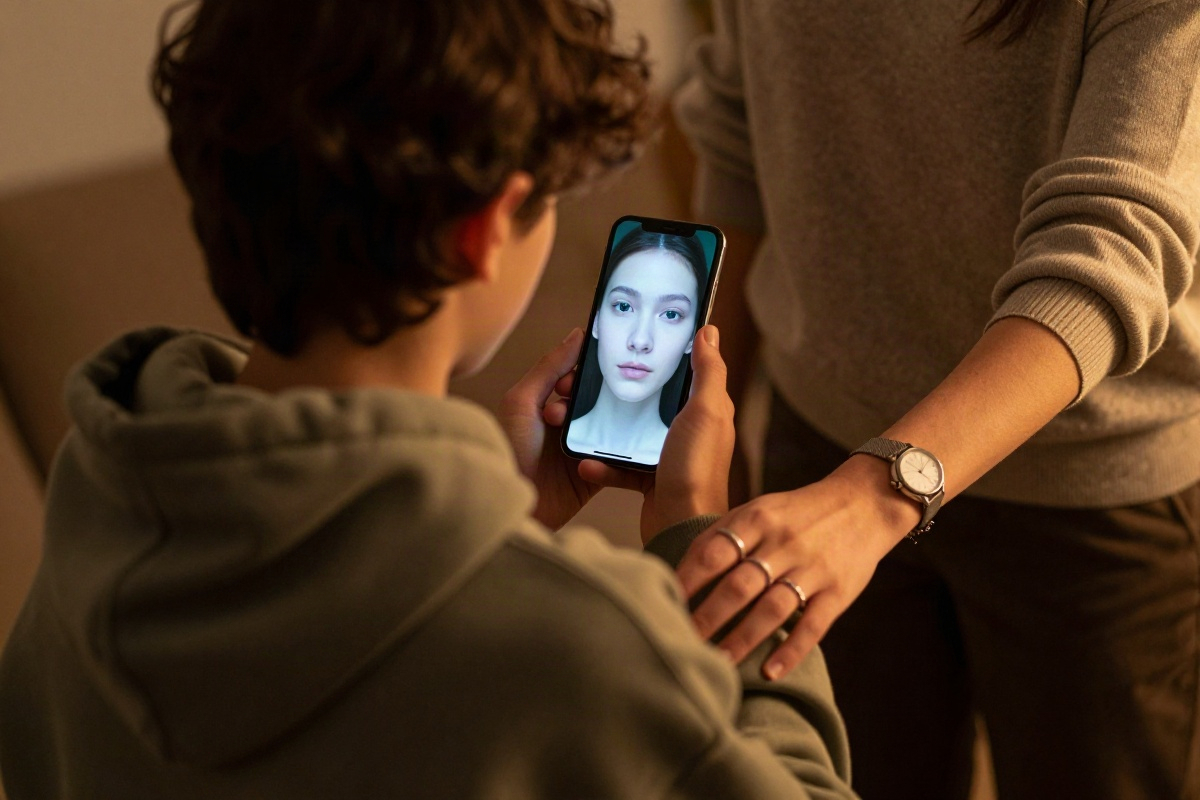
When a teenager spends hours engaging with an influencer who possesses flawless skin, impossible proportions, and a perfectly curated lifestyle, the conversation becomes complicated once they realise that influencer is entirely synthetic. The digital landscape young people navigate is shifting. Virtual influencers—computer-generated characters with real-world social media accounts—are no longer novelties; they are mainstream fixtures. Simultaneously, the tools used to create them, particularly deepfake software, are becoming highly accessible. The intersection of these two trends presents a tangible challenge for anyone guiding young audiences.
Understanding the New Digital Paradigm
Virtual influencers exist in a grey area between fiction and reality. Unlike traditional cartoon characters, they are designed to mimic human presence. They post selfies in real locations, wear tangible designer clothing, and respond to cultural moments. For a young audience still developing media literacy, distinguishing between a human operating a camera and a rendered image operated by a marketing team requires a conscious cognitive step that does not always happen automatically.
The curiosity often leads to the technology itself. Young people see these hyper-realistic avatars and naturally want to understand how they are made. This is where the impulse to search for and download deepfake software enters the picture. What begins as creative exploration—swapping a face onto a video for a comedic effect or animating a still image—can quickly brush against ethical and legal boundaries.
Why Synthetic Personalities Resonate
It is easy to dismiss virtual influencers as obvious fakes, but doing so underestimates their design. They are engineered to exploit social media algorithms and human psychology alike. Their appearance and public persona can be managed more tightly than those of human influencers, although mistakes and reputational controversies remain possible. They offer an aspirational aesthetic without the messy reality of human existence.
For youth, this creates a frictionless parasocial relationship. A virtual influencer can be presented as constantly available and highly polished, potentially setting unrealistic expectations. The danger is not that young people believe these characters are physically real, but that they accept the aesthetic standards set by code as achievable human goals. When the benchmark for beauty or lifestyle is literally rendered by a computer, the goalposts are no longer on the field.
The Deepfake Dimension: Accessibility and Risk
The software powering these synthetic personas has trickled down from high-end visual effects studios to open-source repositories and consumer applications. A teenager with a modest laptop and an internet connection can now download deepfake software capable of impressive facial re-enactment and image synthesis.
This accessibility creates a dual problem. On the consumption side, it degrades trust. If any face can be seamlessly mapped onto any body, young audiences can fall prey to sophisticated misinformation or non-consensual intimate imagery. On the creation side, casual experimentation with deepfake tools can lead to severe consequences. A teenager attempting to create their own virtual influencer or deepfake a friend's face for a joke may inadvertently cross the line into defamation, copyright infringement, or the creation of harmful synthetic media.
Assessing the Psychological and Social Impact
The impact on youth is multifaceted, affecting how they perceive others and how they view themselves.
Practical Steps for Guardians and Educators
Addressing this requires a pragmatic approach. Banning the technology or blocking access to virtual influencers is largely ineffective; the focus must shift to building critical frameworks.
Identifying Synthetic Media
Teach young people to look for the technical artefacts that current software still struggles to render perfectly. While the technology improves constantly, knowing what to look for builds analytical habits.
Indicator What to Observe Eye Reflections Check if the light reflections in both eyes match in position and intensity. Inconsistent lighting is a common rendering error. Teeth and Hair Individual teeth often blur into a single white block. Hair strands may appear painted or merge unnaturally with the background. Micro-Expressions Synthetic faces often lack the subtle, involuntary micro-expressions that signal genuine emotion. The face may feel emotionally flat. Background Warping Look at edges near the face. Deepfakes sometimes leave subtle blurring or warping on the boundary between the face and the background.Establishing Healthy Boundaries with Software
If a young person wants to download deepfake software or experiment with AI avatars, the goal is to channel that curiosity safely rather than shutting it down entirely. Creativity with technology is valuable, but it needs parameters.
Navigating Conversations About Virtual Influencers
When discussing virtual influencers, avoid a dismissive tone. If a teenager admires Lil Miquela or a similar virtual persona, telling them it is "just a computer" invalidates their experience. Instead, ask questions. Why do they follow this account? What do they find interesting about the content?
Use their answers to pivot to the mechanics behind the persona. Discuss the marketing teams that operate these accounts. Highlight the fact that virtual influencers cannot actually use or endorse the products they wear, making their recommendations inherently commercial rather than experiential. This shifts the teenager's perspective from passive consumption to active, critical engagement.
Building Long-Term Digital Resilience
The underlying skill youth need is not just the ability to spot a fake, but the resilience to exist in a world where fakes are ubiquitous. This involves separating human value from digital presentation.
Encourage offline activities where validation comes from tangible outcomes—physical skills, face-to-face friendships, and creative hobbies that result in physical objects. When a significant portion of a young person's self-worth is anchored in the physical world, the hyper-curated aesthetics of virtual influencers naturally lose some of their power.
Additionally, foster an environment where mistakes are navigable. If a teenager creates an inappropriate deepfake or is scammed by a synthetic persona, the immediate reaction should be educational rather than purely punitive. If the fear of punishment is too high, they will hide their digital interactions, making it impossible to guide them.
The synthesis of virtual influencers and accessible deepfake software is not a temporary phase; it is the baseline for the next decade of digital media. By treating the technology as a neutral tool that requires ethical handling, and by treating virtual influencers as marketing constructs rather than aspirational goals, it is possible to equip young people with the pragmatism they need to navigate this environment safely.
Sponsors
Free bmx games online
-

BMX Pro Style
Bmx Pro Style you have different roads and you need to score as many points possible in the allotted time.
-

Bmx Backflips
In this game Bmx Backflips, you have lot of levels to finish in time and complete all tasks.
-

Bmx Park
All this bmx park is only for you.In 90 seconds try to make as many as possible tricks.
-

Bmx Stunts
Depend of number of tricks and their difficulty at the end of this three minutes you will have a score. Have fun
-

Bmx Ramp
In city is a bmx ramp special for tricks. Try it and make some triks in the air